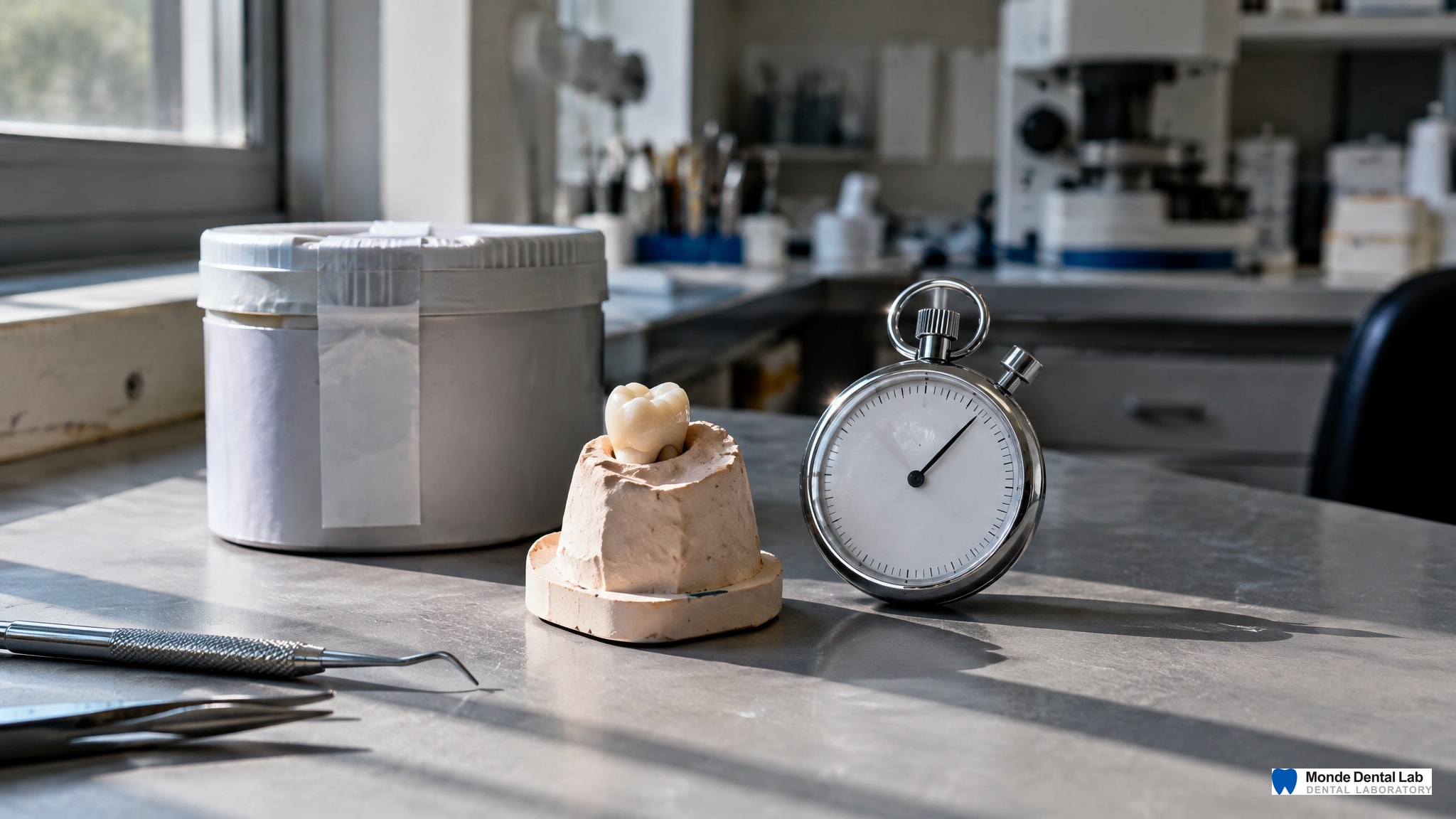
A case that arrives intact, identified and matched to an order moves straight to the bench. A case that arrives with a cracked model, an unmarked bag or no matching submission waits while someone sorts it out. These dental lab shipping instructions follow the process Monde Dental Lab uses with its practices in the United States, France and Germany. They cover packing, outside labeling, the prepaid label and what to do after drop-off.
The guide covers shipping only. It does not cover how to take an impression or choose a restoration. It also leaves carrier names, pickup times and fees to the Monde site, because those differ by country.
Shipping Instructions Begin With the Online Case Submission
Monde's site separates the job into task pages, with Send A Case for submitting a case and Ship A Case for shipping it, so this guide follows that order: submit first, then pack, label and ship.
The submission comes first because it creates the order that everything in the box has to match. The paperwork, the outside markings and the prepaid label all point back to that one record. A box that arrives without a submitted case has nothing to be matched against.
Practices can register an account, submit cases and check pricing online through the Monde site, so each shipment pairs with a case the practice has already entered. A practice that has not submitted a case yet can start with the step-by-step guide to submitting a case online.
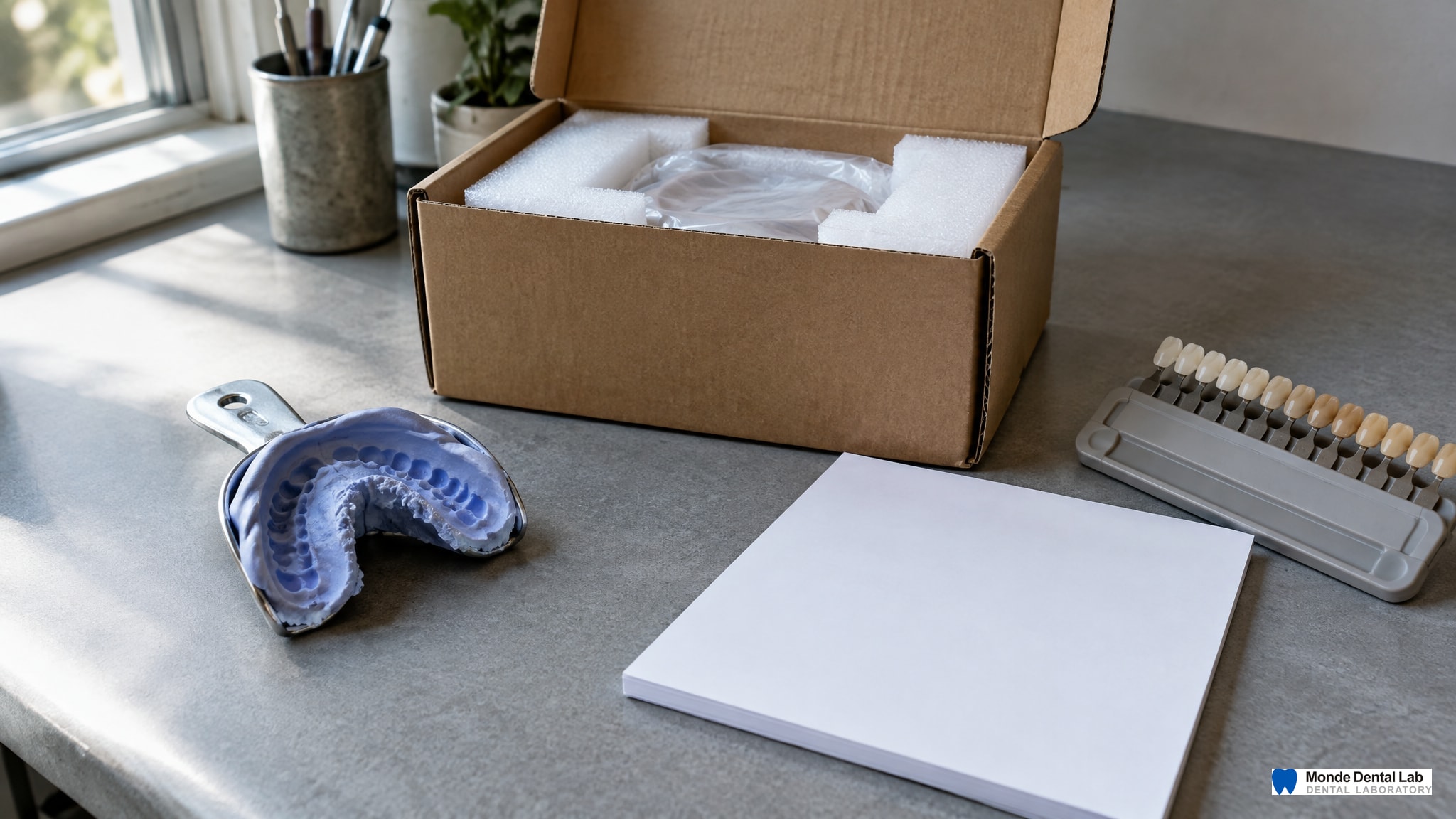
For crowns, bridges and other restorative appliances, the box can hold four kinds of item:
- Impressions
- Bite registrations
- Models
- Paperwork
Which of these go in depends on the case, and the submission should list exactly what is being sent. Practices new to outside production can read the wider context in this overview of outsourced dental lab services for practices.
Dental Impression Shipping: Disinfect and Bag Before Packing
Standard infection-control guidance for dental settings, including the CDC's, treats impressions and bite registrations as items to clean and disinfect before they go to an outside lab. The work happens at the practice, before anything touches the box.
Disinfect Impressions and Bite Registrations Without Damaging Them
Rinse each impression and bite registration first to remove saliva and blood. Then disinfect it with a product the impression material tolerates, following the material manufacturer's instructions for that product.
The disinfectant matters as much as the step itself. A product that suits one material can distort or degrade another, and a distorted impression produces a restoration that does not fit. The practice should check the manufacturer's disinfection instructions for the specific material in use.
Once disinfected, the item needs to shed excess moisture. Pooled liquid can sit against the material for the whole trip. Let the impression drain, and do not wrap it while it is still wet.
Short-lived materials such as alginate need extra attention. Alginate changes shape quickly as it gains or loses water, so the practice should flag it in the case submission. That note lets the lab prioritize the case when it arrives.
Each impression or bite registration then goes into its own sealed bag. The bag carries the same identifier used in the submission, written on the bag itself, so a loose item can always be traced to its case. One item per bag also keeps two impressions from touching.
How to Ship a Dental Case: Pack the Box in Order
Packing follows a fixed order, and the order exists for a reason: heavy, breakable items go low, soft sealed items go above them, and paperwork goes where it can be reached first. Every layer must leave no empty space that lets items move.
Wrap and Separate Each Model
Models are the heaviest and most damage-prone items in the box. A stone model can chip at an edge or crack across a prepared die if it knocks against anything hard.
Each model is wrapped on its own, so that two models never rub against each other. It then sits low in the box, on the padding. It never touches an impression or a bite registration, even through a bag, because a model shifting against a bagged impression can deform the impression.
Build a Padded Base So Nothing Shifts
The foam base goes in first. It absorbs the knocks that the box takes between the practice and the lab.
The order from there is:
- Foam base on the bottom of the box.
- Each wrapped model, set low on the foam and kept apart from the others.
- Sealed bags holding the impressions and bite registrations, placed so they do not press on a model.
- Padding in any remaining gap, so the contents sit snug.
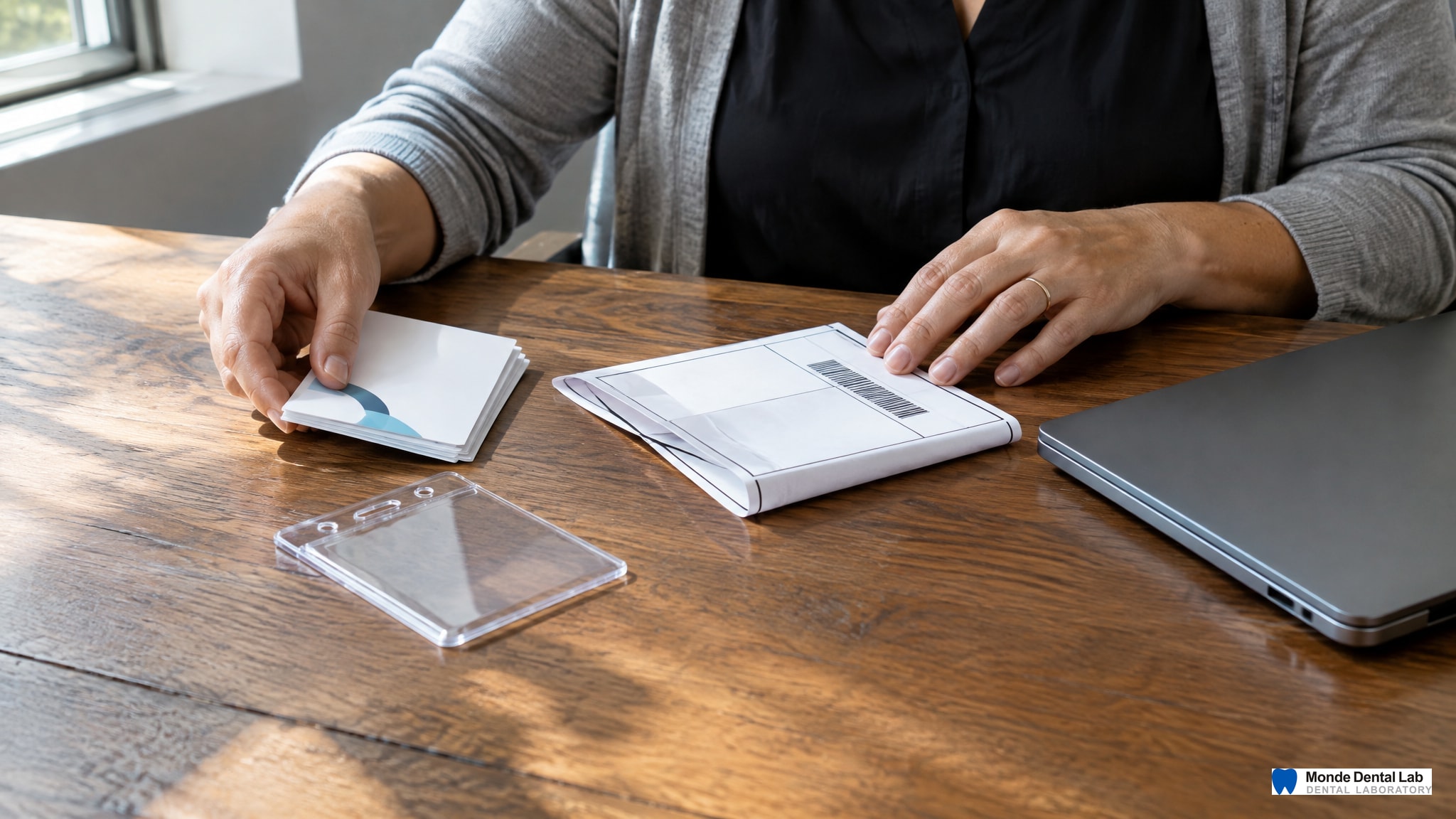
- The paperwork in a sleeve on top, where the lab sees it on opening.
A typical crown case shows how this works. The model is wrapped and set on foam, the impression and bite registration go into their own sealed bags, and the paperwork sits in a sleeve on top. Because the model sits low and the bags sit apart from it, the model cannot knock against the impression in transit.
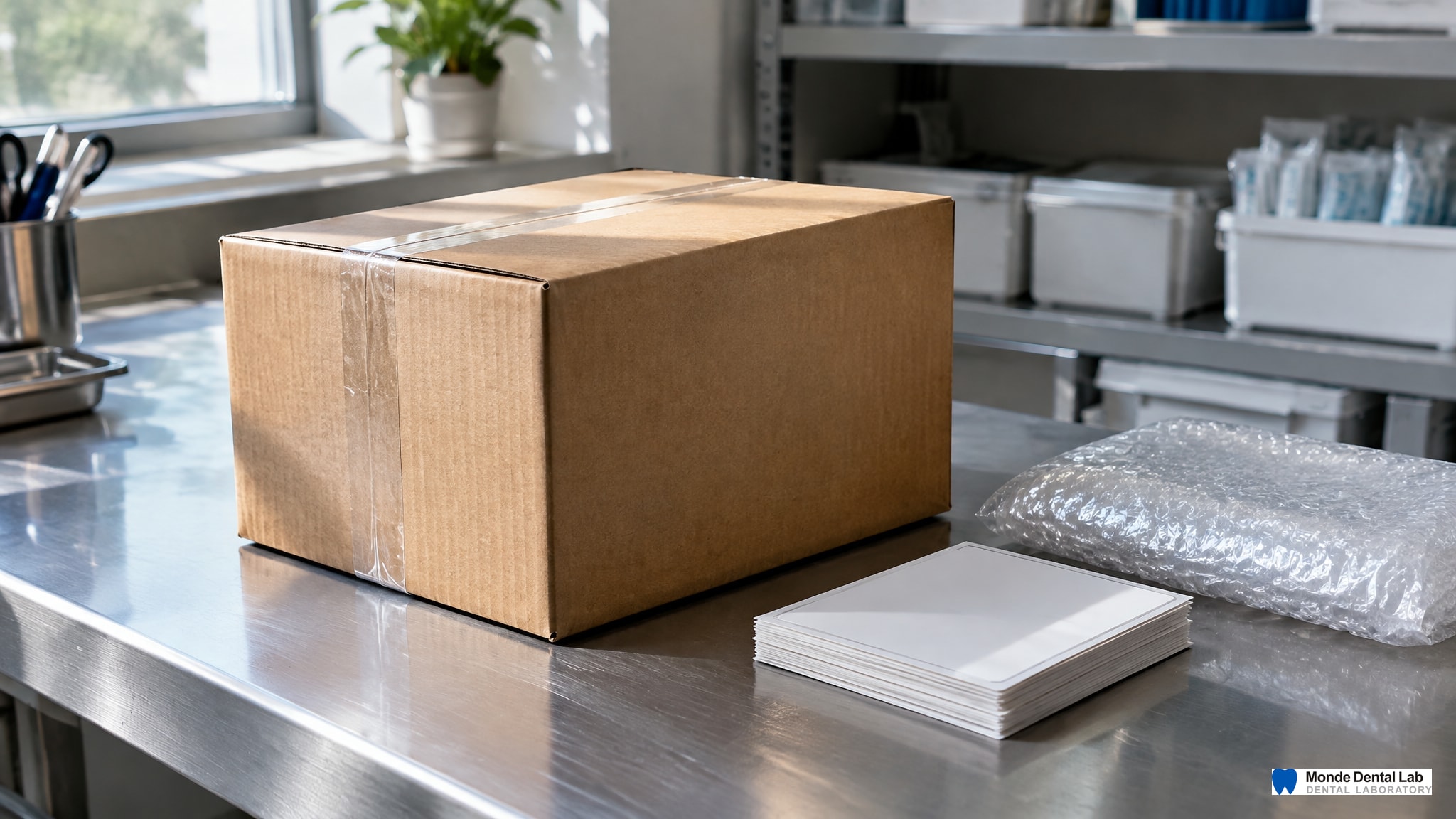
Before taping, close the flaps and give the box a gentle shake. Nothing should slide or rattle. If something does, open the box and add padding where the movement came from, because a shift that is audible on the bench will be worse in a carrier's sorting line.
Seal the box only after the shake test passes.
Dental Lab Shipping Label: What the Outside of the Box Must Show
Two kinds of identification end up on the box, and they do different jobs. The outside markings described here tell the lab what the box is. The carrier label, covered in the next section, tells the carrier where the box goes. One does not replace the other.
Print the Identifiers and Contents the Lab Needs
The outside of the box should show five things:
- Practice name
- Return address
- The patient identifier used at submission, either initials or a case number
- The ship date
- A plain list of the item types inside, such as impression, bite registration, model
The identifier must be exactly the one entered on Send A Case. If the submission says case number 4471, the box says 4471, not a nickname or a different reference.
Full patient details stay out of sight. Carriers and handlers see the outside of the box, so the full name, date of birth and any clinical notes belong in the sealed paperwork inside. The outside carries only what the lab needs to recognise the case.
Clear Old Markings From Any Reused Box
A reused box that still carries an old carrier label or lab marking can misroute a package or confuse the receiving team. A scanner may read the old barcode instead of the new one, and a handler may read an old address as the destination.
Remove or fully cover every earlier label, barcode and handwritten note before packing. Peel labels off where possible. Where they will not come off, cover them completely with a fresh opaque layer, or use a new box, which is the simpler choice when the old markings are hard to clear.
Apply the Prepaid Shipping Label for Each Case
Each case gets its own prepaid label, tied to the case submitted on Send A Case. That link is what lets the box, the paperwork and the label all describe the same order.
Get the Prepaid Label From the Ship A Case Page
The label comes from the Ship A Case page. The page lays out the label steps and is the place to check carrier names, pickup timing and fees. Those details differ across the United States, France and Germany, and keeping them on the page means the steps in this guide stay valid in all three.
Open the page after the box is packed and sealed, with the submitted case in mind. The label should be generated for that case and no other. A label printed for one order and stuck on another box separates the shipment from its paperwork.
Attach the Label So the Carrier Can Scan It
A carrier can only scan what it can read. Print the label at a size and quality that keeps the barcode sharp, and place it flat on a single face of the box, preferably the largest one.
A few habits prevent scan failures:
- Keep the label off seams and edges, where it can crease or tear.
- Smooth it flat, with no wrinkles across the barcode.
- If tape is needed to secure it, use clear tape and keep it from distorting the barcode.
- Make sure no other label or marking sits beside it that could be mistaken for a second address.
The practice's own identification from the previous section goes on a different face of the box, away from the carrier label. This keeps the two from being confused.
Hand Off the Case and Track the Shipment
When the box is ready to ship case to dental lab, the practice drops it off, or has it collected, under the carrier method named on the label. Drop-off and pickup options come from the Ship A Case page, so the practice should use the method shown there and not switch carriers.
Keep the tracking record. It shows when the carrier took the box and where it is, and it is the first thing to check if the case seems slow. File it with the case, alongside the ship date written on the box.
If a shipment is late or arrives damaged, the practice contacts Monde with the case details: the identifier from the submission, the ship date and the tracking record. Those three items let the lab find the order and the shipment quickly.
Year-end carrier schedules can change pickup days. Practices shipping in the last weeks of 2026 or the first days of 2027 should check the pickup timing on the Ship A Case page before they pack, so a case does not sit waiting for a collection that is not coming.
Mistakes That Delay or Damage a Case
Most delays trace back to a short list of errors, and each has a simple fix.
- Mismatched identifiers. The bag, the paperwork and the box say different things. Use the identifier from the Send A Case submission everywhere.
- No online submission. The box arrives with nothing to match it. Submit the case before packing anything.
- Wrong disinfectant for the material. The impression distorts. Check the material manufacturer's instructions before disinfecting.
- Unflagged alginate. The lab cannot prioritize what it does not know is short-lived. Note it in the submission.
- Wet or unsealed impressions. Moisture and loose items travel badly. Drain the impression, then seal it in its own bag.
- Models touching impressions. Contact can deform the impression or chip the model. Wrap models separately and keep them low and apart.
- Empty space in the box. Items move and crack. Fill gaps and run the shake test.
- Full patient details on the outside. Anyone handling the box can read them. Keep them in the sealed paperwork.
- Old labels on a reused box. The package can misroute. Remove or fully cover every earlier marking, or use a new box.
- A label that will not scan. The carrier cannot track the box. Print it cleanly and apply it flat.
To start the next shipment, register a Monde practice account and open the Ship A Case page.
Frequently asked questions
Do I have to submit the case online before I pack the box?
Yes. The submission on Send A Case creates the order that the paperwork, outside markings and prepaid label all match. A box with no submitted case behind it has nothing to be matched against when it arrives.
What should I put on the outside of a dental case box?
Show the practice name, return address, the patient identifier used at submission (initials or case number), the ship date and a plain list of item types. Keep full patient details in the sealed paperwork inside. This is separate from the carrier label, which carries the delivery information.
Where do I get the prepaid shipping label?
The label comes from the Ship A Case page on the Monde site. The same page lists carrier names, pickup timing and fees for the US, France and Germany. Generate the label for the case you submitted, then attach it flat so the carrier can scan the barcode.
What if the shipment is late or arrives damaged?
Check the tracking record first, then contact Monde with the case details. Those are the identifier from the submission, the ship date and the tracking record. They let the lab locate the order and the shipment.
Can I reuse a shipping box for a case?
Yes, if it is sturdy and holds the contents snugly. Remove or fully cover every old carrier label, barcode and lab marking before packing, because they can misroute the package or confuse the receiving team. A new box is simpler when old markings will not come off.